Which US Airline Has the Most Legroom in Economy? 2026 Seat Pitch Rankings
JetBlue leads all US airlines with 32.3 inches of economy legroom in 2026. See the full seat pitch rankings, what's changing, and how to score more space.
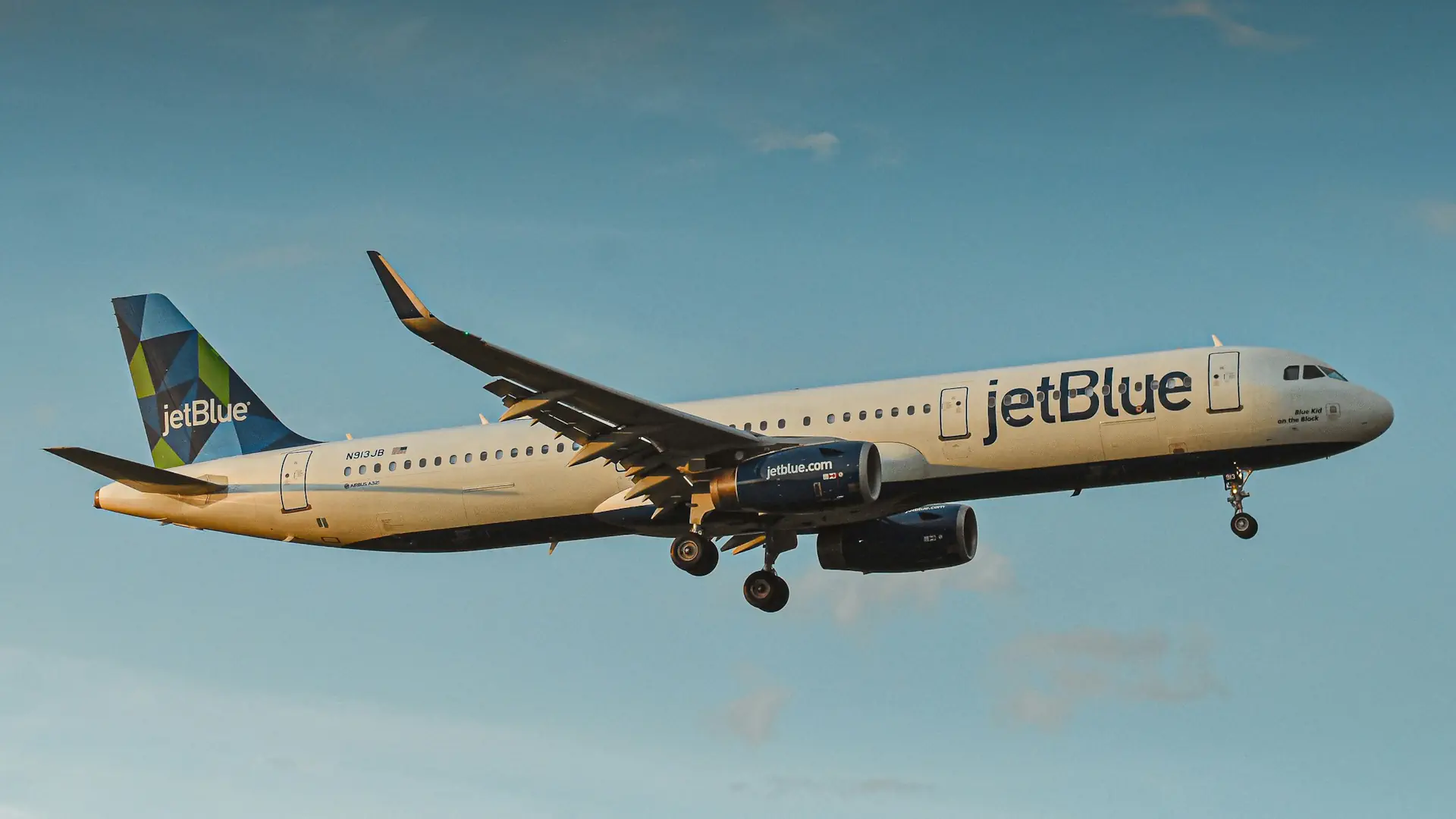
Quick answer: JetBlue offers the most economy legroom of any US airline in 2026, with an average seat pitch of 32.3 inches — more than four inches roomier than Spirit and Frontier at the bottom of the rankings. Southwest follows at roughly 31–31.8 inches, with Alaska and Delta tied close behind at 31 inches.
But 2026 is a strange, pivotal year for legroom. JetBlue — the longtime comfort king — has announced changes that could knock it off the throne, and Southwest just completed the biggest overhaul in its 54-year history. If you’re booking flights this year, the airline you choose matters more than ever. Here’s the full breakdown.
What Is Seat Pitch (and Why It’s Not Exactly Legroom)
Seat pitch is the distance from any point on your seat to the exact same point on the seat in front of you. It’s the industry’s standard proxy for legroom, because the bigger the pitch, the more total space your row gets.
One caveat: pitch isn’t a perfect measurement of knee room. Modern “slimline” seats use thinner seatbacks, so a 31-inch pitch on a new aircraft can feel roomier than a 32-inch pitch on an older, thickly padded seat. Still, pitch remains the best apples-to-apples number we have — and the differences between US airlines are big enough to feel.
For context: in the early 2000s, 34 inches was common in US domestic economy. Today the industry standard hovers around 30–31 inches, and ultra-low-cost carriers have compressed all the way down to 28.
US Airlines Ranked by Economy Legroom (2026)
The rankings below are based on average economy seat pitch across each carrier’s busiest domestic routes, drawing on a January 2026 Upgraded Points data study and current fleet configurations. Actual pitch varies by aircraft type, so always check your specific flight (more on that below).
| Rank | Airline | Avg. Economy Seat Pitch | Typical Seat Width | Extra-Legroom Product |
|---|---|---|---|---|
| 1 | JetBlue | 32.3" | 17.8"–18.4" | Even More Space |
| 2 | Southwest | ~31"–31.8" | ~17" | Extra Legroom |
| 3 (tie) | Alaska Airlines | 31" | ~17" | Premium Class |
| 3 (tie) | Delta Air Lines | 31" | ~17.2" | Comfort+ |
| 5 | American Airlines | 30.2" | ~17" | Main Cabin Extra |
| 6 | United Airlines | 30.1" | ~17.3" | Economy Plus |
| 7 | Hawaiian Airlines | 29" | ~16.5"–18" | Extra Comfort |
| 8 (tie) | Spirit Airlines | 28" | ~17.75" | Big Front Seat |
| 8 (tie) | Frontier Airlines | 28" | ~17"–18" | UpFront Plus / Stretch |
The gap between first and last place — about 4.3 inches — is roughly the length of a smartphone. That’s the difference between crossing your legs and eating your knees on a five-hour transcon.
1. JetBlue — The Legroom Leader (For Now)
Average pitch: 32.3 inches | Fleet: Airbus A220, A320, A321
JetBlue has built its entire brand around being the comfortable low-cost carrier, and in 2026 it still delivers the most generous standard economy on any US airline. Beyond the class-leading pitch, JetBlue also offers the widest economy seats in the country (up to 18.4 inches on some aircraft), free high-speed Wi-Fi, and seatback screens at every seat.
Need even more room? JetBlue’s Even More Space seats stretch to roughly 35–38 inches of pitch and come with early boarding.
The big 2026 warning: JetBlue has announced plans for “Mini Mint,” a new domestic first-class cabin. To make room for those 36–37-inch-pitch premium seats, the airline is expected to reduce standard economy pitch to around 30 inches as aircraft are retrofitted — a process starting in 2026 and running through at least the end of 2027. Translation: JetBlue’s legroom crown has an expiration date. If you’re flying JetBlue this year, you’ll most likely still get the roomy configuration, but check your seat map — the fleet will be a mixed bag during the transition.
2. Southwest — Still Roomy, but a Whole New Airline
Average pitch: ~31–31.8 inches | Fleet: All Boeing 737
Southwest spent five decades as the quirky outlier: open seating, two free checked bags, no change fees. That era is over. As of January 27, 2026, Southwest operates with assigned seating, boarding groups 1–8, and a three-tier seat lineup: Standard, Preferred, and Extra Legroom. Checked bags now cost $35 for the first and $45 for the second on most fares (Choice Extra bundles and certain credit cardholders still get them free).
Here’s what matters for your knees: Southwest’s new standardized cabin sets standard economy at about 31 inches of pitch — a slight trim from its old ~32-inch layout — to make room for new Extra Legroom seats offering up to five additional inches at the front of the cabin and exit rows. That still keeps Southwest ahead of American and United in standard economy, and its all-737 fleet means the experience is unusually consistent from flight to flight.
3 (tie). Alaska Airlines — Quietly Excellent
Average pitch: 31 inches | Fleet: Boeing 737 family, Embraer 175 (regional)
Alaska doesn’t market legroom loudly, but at 31 inches it ties Delta for the best standard economy among the traditional network carriers. Its Premium Class upsell adds roughly four extra inches plus free drinks, and Alaska’s merger-expanded network (including Hawaiian) makes it a strong West Coast pick for comfort-conscious flyers.
3 (tie). Delta Air Lines — The Most Comfortable Legacy Giant
Average pitch: 31 inches | Fleet: Highly varied (A220, A321, 737, 757, 767, A330, A350)
Among the “Big Three” legacy carriers, Delta consistently offers the most standard economy space at around 30–31 inches, paired with seatback entertainment on most aircraft and a generally more premium cabin feel. Comfort+ bumps you to roughly 34 inches with dedicated bin space. Delta’s fleet is diverse, so pitch varies more than on Southwest or JetBlue — its A220s are a sweet spot.
5. American Airlines — Middle of the Pack
Average pitch: 30.2 inches | Fleet: A319/A320/A321, 737, 777, 787
American sits at the modern legacy-carrier baseline: about 30 inches on most domestic aircraft, with 30.2 inches as its route-weighted average. Fun history: American actually tried selling legroom as a brand in the early 2000s with “More Room Throughout Coach,” giving the entire cabin 34–35 inches of pitch. Passengers loved it but wouldn’t pay extra for it, and the program was scrapped by 2004 — a failure airline executives still cite when explaining why economy stays tight. Today, Main Cabin Extra (roughly 33–35 inches) is where the extra space lives.
6. United Airlines — Tightest of the Big Three
Average pitch: 30.1 inches | Fleet: A319/A320/A321, 737, 757, 767, 777, 787
United’s standard economy averages just over 30 inches, fractionally behind American. The saving grace is Economy Plus, one of the largest extra-legroom sections in the industry at around 34 inches, often available as a reasonably priced upgrade or free for elite members.
7. Hawaiian Airlines — Paradise, Tightly Packed
Average pitch: 29 inches | Fleet: A321neo, A330, 787-9
Hawaiian’s warm service and island hospitality are real, but its economy pitch averages just 29 inches — noticeably snug for five-plus-hour overwater flights. Extra Comfort seats (about 36 inches) are worth serious consideration on any Hawaii route.
8 (tie). Spirit and Frontier — You Get What You Pay For
Average pitch: 28 inches | Fleets: Airbus A320 family
America’s ultra-low-cost carriers sit at the legal-limit end of the spectrum with roughly 28 inches of pitch and seats that barely recline (Spirit’s famously don’t — they’re “pre-reclined”). The trade-off is the fare. Both airlines sell escape hatches: Spirit’s Big Front Seat is one of the best deals in domestic air travel (a first-class-style seat for a modest upcharge), and Frontier offers UpFront Plus and stretch seating with significantly more room.
The Big 2026 Legroom Shake-Up: What’s Changing
If you only remember three things about airline legroom this year, make it these:
JetBlue’s crown is wobbling. The Mini Mint retrofit is expected to shrink JetBlue’s standard economy from 32.3 inches toward the 30-inch industry standard as aircraft are reconfigured through 2027. Comfort-seekers should enjoy the roomy cabins while they last — and double-check the seat map when booking.
Southwest is now “just another airline” — with better-than-average legroom. Assigned seating, bag fees, and paid seat selection arrived in 2025–2026, but its ~31-inch standard pitch and new Extra Legroom section keep it near the top of the comfort rankings.
The industry is segmenting, not improving. No US carrier plans to add standard economy legroom fleet-wide. Instead, airlines are betting you’ll pay for extra-legroom rows and premium cabins while basic economy stays tight. Knowing the rankings — and the workarounds below — is how you stay comfortable without overpaying.
How to Get More Legroom Without Paying Extra
You don’t always need to buy your way to comfort. These tactics work on nearly every US airline:
Check the aircraft type, not just the airline. Pitch varies within a single carrier’s fleet — sometimes by 2–4 inches. Tools like SeatGuru, aeroLOPA, or the “Legrooms for Google Flights” Chrome extension show the exact configuration for your flight before you book.
Ask at the gate. Politely asking a gate agent about exit-row or bulkhead availability — especially if you’re tall — costs nothing and works more often than you’d think on lightly booked flights.
Use your status or credit card. Elite frequent flyers often get free or discounted extra-legroom seats (Delta Comfort+, United Economy Plus, Alaska Premium Class, and Southwest Extra Legroom all have elite-access rules). Southwest’s Priority credit cardholders, for example, can select Extra Legroom seats free within 48 hours of departure.
Keep your feet space clear. It sounds obvious, but stowing your personal item overhead instead of under the seat in front of you reclaims several inches of usable legroom for free.
Target the right aircraft. JetBlue’s A220s, Delta’s A220s, and exit rows on almost anything are consistent winners. Avoid high-density A320neos and older regional jets when you have a choice.
Is Paying for Extra Legroom Worth It?
Every major US airline now sells an extra-legroom tier, typically adding 3–6 inches of pitch for anywhere from about $15 to $150 per segment depending on route and demand. A rough value guide:
Usually worth it: Flights over 3 hours, red-eyes, Hawaii and transcon routes, anyone over 6 feet tall, and Spirit’s Big Front Seat at almost any price.
Usually skippable: Flights under 2 hours on JetBlue, Southwest, Alaska, or Delta — their standard economy is already at or above 31 inches.
Do the math on bundles: Southwest’s Choice Extra fare, for instance, bundles Extra Legroom seating with two free checked bags — which can beat buying each separately if you need both.
Frequently Asked Questions
Which US airline has the most legroom in economy?
JetBlue, with an average economy seat pitch of 32.3 inches in 2026 — the most of any US carrier. Southwest is second at roughly 31–31.8 inches, followed by Alaska and Delta tied at 31 inches.
Which US airline has the least legroom?
Spirit and Frontier are tied for last at about 28 inches of seat pitch — roughly 4 inches less than JetBlue. Hawaiian Airlines is the tightest non-budget carrier at 29 inches.
What is a good seat pitch in economy?
31–32 inches is considered good for US domestic economy. 30 inches is the current legacy-carrier standard, and anything at 28–29 inches will feel cramped for most adults on flights longer than about two hours. Extra-legroom seats typically offer 33–38 inches.
Is JetBlue reducing its legroom?
Yes — JetBlue has announced a new “Mini Mint” domestic first-class product, and standard economy pitch is expected to drop to around 30 inches as planes are retrofitted starting in 2026, with the process running into 2027 or later. Until your specific aircraft is reconfigured, you’ll still get the roomier layout.
Does Southwest still have open seating and free bags?
No. As of January 27, 2026, Southwest uses assigned seating with Standard, Preferred, and Extra Legroom seat types. Checked bags cost $35 (first) and $45 (second) on most fares booked since May 28, 2025, though Choice Extra fares, top-tier elites, and certain credit cardholders still get free bags.
How can I check the legroom on my specific flight?
Look up your flight’s aircraft type on SeatGuru, aeroLOPA, or the “Legrooms for Google Flights” browser extension. Pitch can vary by several inches between aircraft within the same airline, especially during 2026’s cabin retrofits.
Do exit row seats really have more legroom?
Yes — exit rows typically offer 35–40 inches of pitch, often the most space in economy. The trade-offs: you must be able to assist in an emergency, you can’t store bags at your feet during takeoff and landing, and some exit-row seats have limited recline.
The Bottom Line
In 2026, JetBlue is still the answer to “which US airline has the most economy legroom” — but it’s the last call for its famously roomy cabins. Southwest, Alaska, and Delta form the reliable comfort tier at 31 inches, American and United hold the 30-inch industry baseline, and Spirit and Frontier remain the knees-to-seatback budget option unless you spring for their (genuinely good-value) premium seats.
The smartest move this year isn’t picking an airline blindly — it’s checking the seat map on your exact aircraft before you click buy. In a year when cabins are being ripped out and reconfigured across the country, that thirty-second check is the difference between stretching out and squeezing in.
Seat pitch figures reflect averages across each airline’s busiest domestic routes as of early 2026 and may vary by aircraft and configuration. Airline policies change frequently — verify details with the carrier before booking.